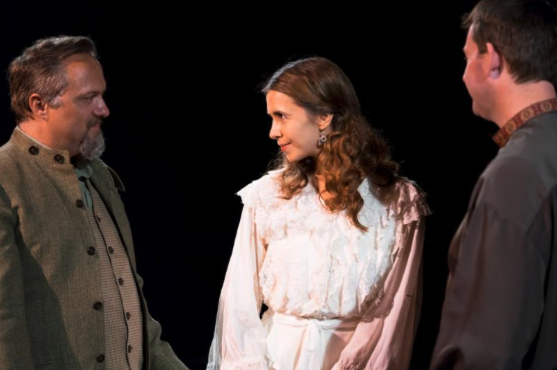
Review: The Seagull by Classic Theatre of San Antonio
by Michael Meigs
Those echanted by Anton Chekhov's plays may be bewildered. Classic Theatre San Antonio's staging has none of the melancholy or gentle despair that characterize the good doctor's four major plays. The Seagull was the first of these, in 1896, and established a new approach to depiction onstage of the human condition. Not naturalism, exactly, or realism, but rather a gathering of individuals far from the cosmopolitan capital, each of them completely imagined and interacting throughout the action and over time. For the initial Moscow Art Theatre production, Laurence Senelick notes, "Confessing that he had no idea of what the play meant, Stanislavsky used it as an exercise in nastroenie (atmosphere, mood); he re-created the facture and texture of everyday life through lighting, sound and behavioural traits."*
Distinguished British dramatist Christopher Hampton originated this version at the Royal Court Theatre in 2007, working from a literal translation by Russian speaker Vera Liber. He chose to move the setting not to Britain but to upper New York State. The blunt dialogue, odd references to late twentieth-century U.S. popular culture, and the in-your-face anguish and cupidity of the characters give one the impression that this isn't Chekhov but rather Sam Shepard or Tracy Letts. August Osage County, anyone? This version certainly serves up the "hard truths and shocking secrets" of the 2008 production of Letts's play.
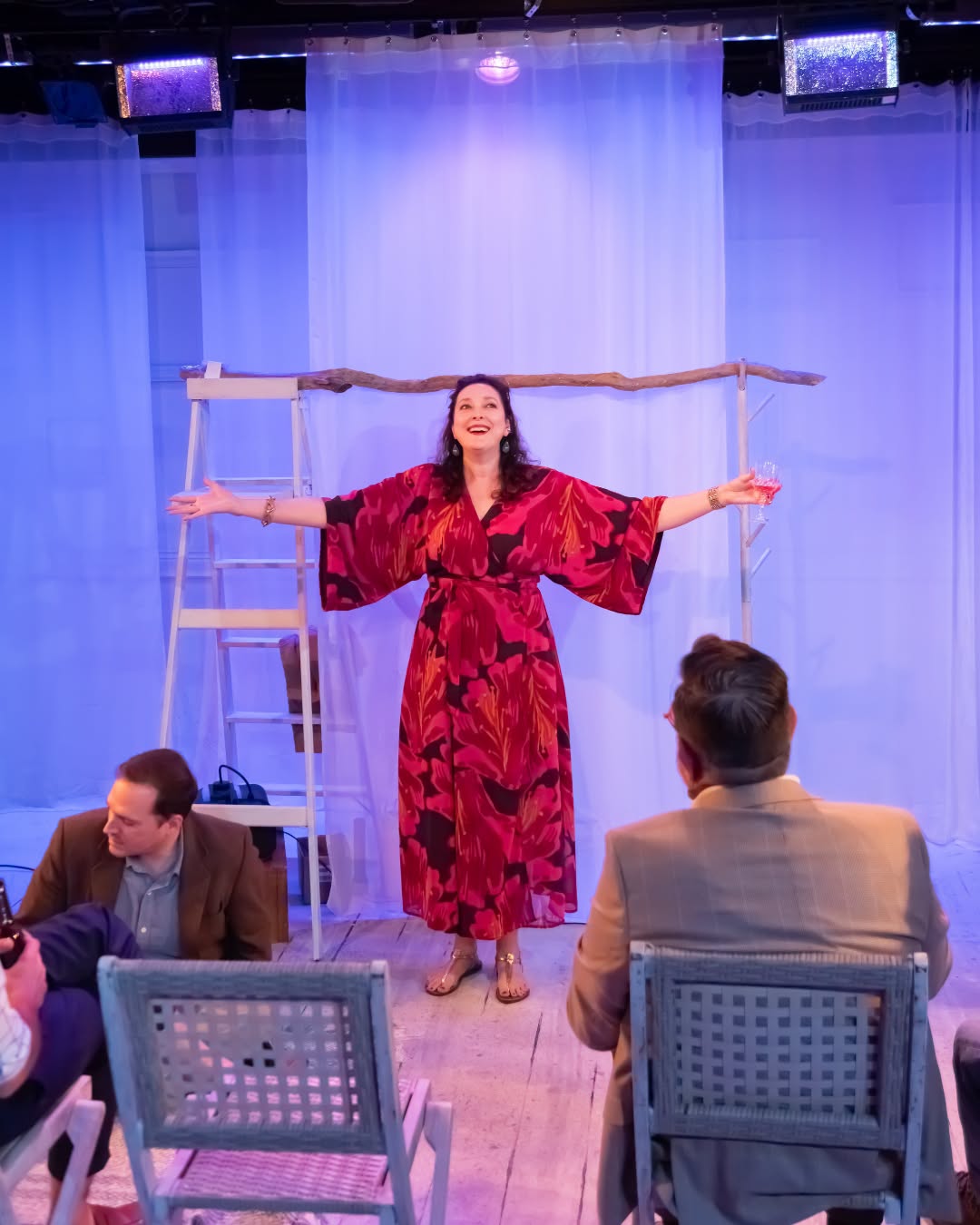
Director Eva Laporte puts the play up on the barest of bare thrust stages at the Classic Theatre, in what used to be referred to as San Pedro Playhouse's Cellar Theatre. Designer Javier Sanchez drapes the back of the shallow stage in translucent curtains and provides minimal furnishings to represent a country manse that periodically fills up with cast of thirteen actors.
The five acts and several years develop over the course of a bit more than two hours, with one fifteen-minute intermission. You could divide the action any of several ways: focus on art, the superannuated actress Arkadina still glorying in her past and regarding herself with admiration, as opposed to her son, who desperately wants to establish a new form of art, symbolic, eternal, and largely nonsensical; focus on the sentiments, including 1) her son Konstantin's infatuation with nineteen-year-old neighbor Nina, daughter of the estate manager and an aspiring actress, 2) goth Masha, hopelessly attracted to Konstantin, while 3) she's courted by impoverished village schoolmaster Medvedenko, 4) Arkadina's lover the reputed writer Trigorin, 5) Nina's fascination with Trigorin, who's happy to exploit her, and 6) Paulina, wife of the estate manager and mistress of Dorn, the local doctor; or focus on the social structure, including the owner of the estate, his dependents, the Moscow artists, and the doctor as a local observer.
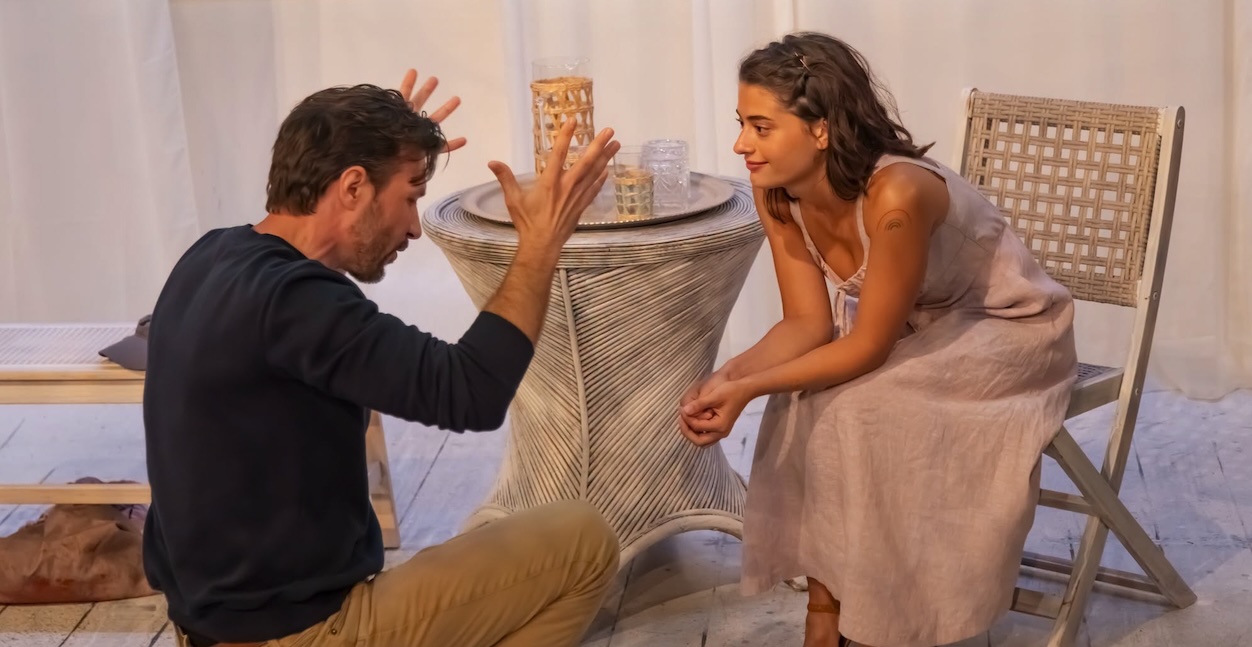
I know. It sounds complicated. But by creating this world, complete unto itself, and gradually revealing the disappointments of these characters, Chekhov brings us into a gradual, gentle realization of the inevitability of failure and the uselessness of ambition. The group scenes may remind you of those family gatherings to which you submit every holiday even despite the conflcts and hidden pains. At least all of you have one another, don't you?
Not always. Lives depart from one another, people give in to less than they want, betrayals become reconciliations. You know; life happens despite our best intentions.
T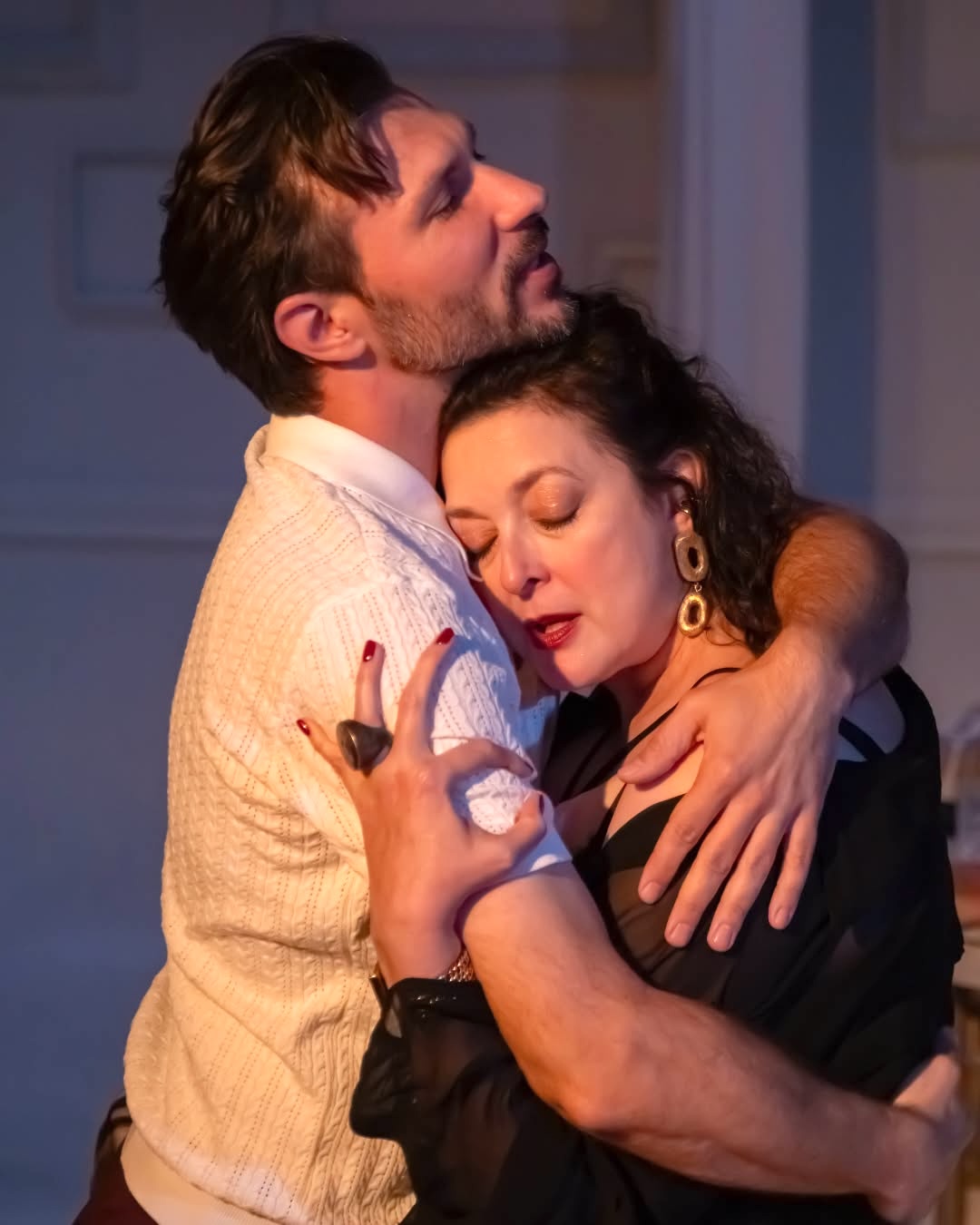 his Classic Theatre production rejects the lassitude that I prize in Chekov and regard as lasting insight. These characters are all striving and intent. As Nina, the titular symbolic seagull, Gabriela Luz Velazquez is wide-eyed, breathless fascination in the opening action and La Llorona in the final act. Emily Spicer as actress Irina Arkadina is loudly, flamboyantly self-satisified. Hunter Wulf as son Konstantin is angry, loud, and self-destructive, contrasting with Zach Lewis as successful writer Trigorin, about the same age but full of sleek smugness and opportunism. Estate manager Shamrayev, played by Steve Burney, simply brays every time he opens his mouth.
Arkadina's seduction of Trigorin, distracting him from the juicy young Nina, takes place on a table top and is lurid enough to have been staged in a sex club; okay, no clothes are shed but all inhibitions are.
Of this crew, only Brian Hodges as the schoolmaster, Hayley Burnside as gloomy Masha, and Meredith Bell Alvarez were recognizable to me as Chekhov characters. Kurt Robbins as Dr. Dorn gets a pass for maintaining calm amidst the storms.
In his analysis for the Cambridge guide, Senelick notes, "With its awkward vestiges of nineteenth-century stagecraft and its interweaving of artistic debates with love affairs,The Seagull needs careful balance and an almost musical rendition to avoid coming off as melodrama or soap opera."
Agreed. In my opinion, the Classic Theatre staging has lots of fortissimo and not nearly enough pause for reflection.
*Laurence Seneleck, "Directors' Chekhov," (Cambridge, Cambridge University Press, The Cambridge Companion to Chekhov, p. 180)
EXTRA
Click to view the Classic Theatre program for THE SEAGULL
The Seagull
by Anton Chekhov
Classic Theatre of San Antonio
February 12 - March 06, 2016
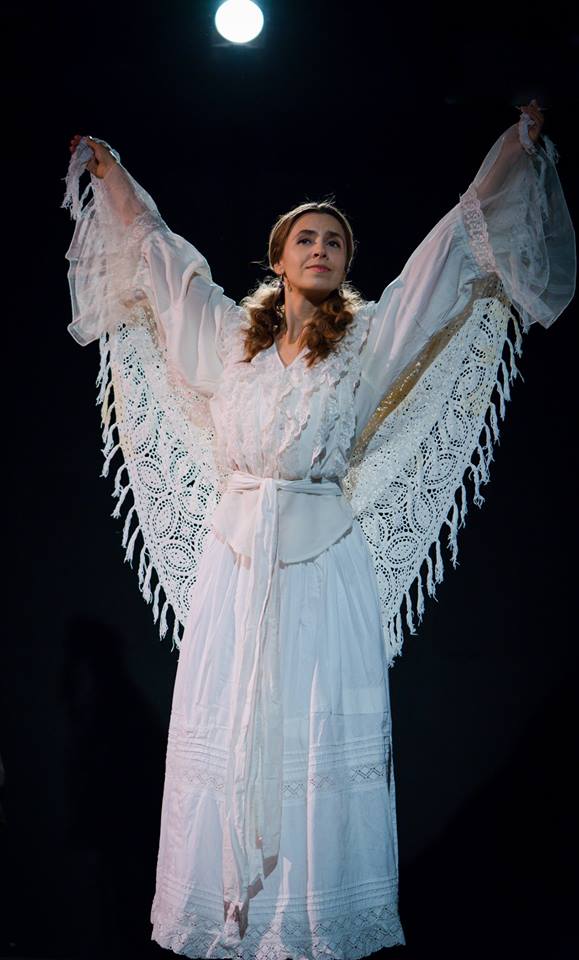
The Seagull runs February 12 - March 6. Show times are Fridays and Saturdays at 8 p.m. and Sundays at 3 p.m.
Call the box office for tickets or group rates: (210) 589-8450 or purchase tickets online at www.classictheatre.org. There is no service charge for using the ticket service.
Tickets prices are $25 for general admission, $20 for military/seniors/educators and $10 for students.
The Classic Theatre is located at 1924 Fredericksburg Road, in the heart of the Deco District. The theatre has accessibility for the handicapped.
Tickets $10 students, $20 senior/military/EDU, $25 general admission