Recent Reviews
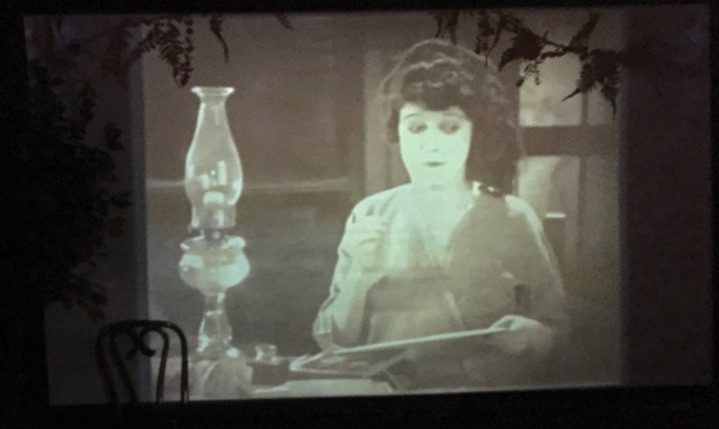
Review: Gardenalia by Coldtowne Theatre
by Michael Meigs
Published on April 21, 2016
After the curtain call the women participants were surrounded by enthusiastic friends enticed to take up the curtain call invitation from the Dionysium: "Give it a try! It's a lot of fun!"
Since spontanaeity is a large part of the attraction of improv performance, repeated or long-run stagings at improv locales may beg the question. Is this or that clever turn of plot or wisecrack really straight out of the ether, or is the performer flourishing it again like a Derringer kept up the cuff, a reliable old whoopee cushion, or the cascade of cards for 52-Card Pickup? The occasional traveler in Improv World cannot know but …

Review: Richard III by Baron's Men
by Michael Meigs
Published on April 19, 2016
Andy Bond's casual mastery of Shakespearian verse is a treat. His delivery as Richard III is strikingly low key and has the charm of apparent spontaneity.
The Baron's Men company in Austin got started as a lark in 1997, when a group of friends inspired by the Society for Creative Anachronism put together a twenty-minute version of Henry V. They went on to perform occasional Shakespeare on portable platforms until in 2005 tech magnate Richard Garriot offered to put up an Elizabethan-style stage on his waterfront property. He was serious about it. Construction was sturdy, and capacity of the two covered …
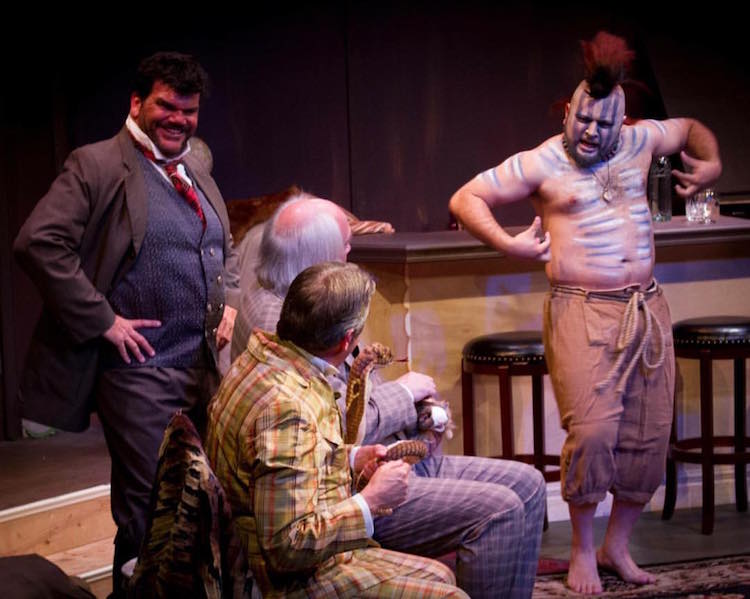
Review: The Explorers' Club by Austin Playhouse
by David Glen Robinson
Published on April 19, 2016
Laughs are almost non-stop, but many are provoked by condescension and name-calling of world cultures and historical periods -- and the explorers finish with their privileges intact.
The Explorers Club by Nell Benjamin is a relatively new American comedy, nominated for the Drama Desk Best Play Award in 2014. Benjamin’s wit takes on a series of largely English characters ranging from stuffy to stiff in a club in London in 1879. These are high Victorian times, and a little wit suffices to bring out an abundance of comedic material. Austin Playhouse with its talented cast puts on an exceptionally funny version of …

Review: Bull by Street Corner Arts
by Michael Meigs
Published on April 18, 2016
'Bull' may leave a sour taste in your mouth, particularly after that last unendurably long fade in the final scene, but it's exactly the taste that playwright Mike Bartlett wants you to have.
Mike Bartlett's single-syllable title for this piece doesn't give much away. The playwright's a Brit, so perhaps Bull isn't intended to suggest the American message of unbelievable mendacity. The verb "to bully" is more to the point, for one of this work-team trio has every reason to complain of bullying, and does so. For me the most vivid association is with the animal. Not for the power or muscle or determination of the bull; instead, …

Review: Durang Durang by Oh Dragon Theatre Company
by Michael Meigs
Published on April 16, 2016
Dismaying first-half material gives way to three sketches that are coherent, mostly non-referential, and entertaining, done by a fully engaged and energetic company.
The 1994 collection of short theatre pieces by Christopher Durang done by Oh Dragon Theatre Company at the City Theatre is a writer's wastepaper basket, the sort of collection of scribblings that the Harry Ransom Center might treasure and ponder some twenty years from now. They seem wildly uneven. Everything before the intermission I found dismaying. Not because of the actors or the direction, except for the choice of the material in the first place. …

Review: She Loves Me by Mary Moody Northen Theatre
by Michael Meigs
Published on April 12, 2016
Confident romantic leads Cheyenne Barton and Matt Buzonas, comic Maureen Fenninger with her hungry heart of gold and other undergrads have plenty of stage time and fine musical opportunities.
There's a sweetness to She Loves Me, compounded of shop dust, wistfulness and perfume. Miklós László wrote this romantic comedy in 1937, shortly before abandoning his native Budapest for America. His gently humorous character-based tale about shop clerks seeking romance lent itself nicely to the 1941 MGM film The Little Shop Around the Corner with Jimmy Stewart and Margaret Sullavan, recycled in 1949 for the Judy Garland and Van Johnson musical In The Good Old …