Recent Reviews

Review: Footloose by Zilker Theatre Productions
by Michael Meigs
Published on July 19, 2011
Granted, recognized and applauded -- but for a viewer who'd never seen the film or the stage production, the book for Footloose was really, really lame. We're talking Elvis-Presley-movie levels of dumb.
I attended Zilker Theatre Production's Footloose ten days ago on opening weekend, and I'm only just now writing it up. They've got a nice long run -- six weeks, four nights a week -- and an Austin tradition of celebrating the summer that stretches back 53 years. Judging from the full parking lot and the large, cheerful crowd lounging on the slope above the Hillside Theatre, Zilker Productions doesn't need much help in selling the …

Review: 69 Love Songs by Gnap! Theatre Projects
by Brian Paul Scipione
Published on July 14, 2011
It’s in the very nature of improv for the performers to search feverishly for the emotional click with the audience: most often a laugh but sometimes a revelation, a moment of disgust, or a connection of sympathy.
If you scour the liner notes of 69 Love Songs by the Magnetic Fields you will find this admission by writer Stephen Merritt: “I like over-the-top sentimentality if there’s a justification for it.” While this thought is no way to sum up the majesty of his much-beloved indie/emo/pop/retro/folk rock masterpiece album, it is a good way to introduce it. The second necessary detail is that Merritt did not write 69 Love Songs as a collection …

Review: The Little Dog Laughed by City Theatre Company
by Michael Meigs
Published on July 13, 2011
The Little Dog Laughed was an unexpected gift, a challenge to convention and a story with heart.
City Theatre Artistic Director Andy Berkovsky had wanted to do Douglas Carter Beane's four-character sex farce since at least mid-2009. The title floated out there on the City's season listings, pending availability of performance rights. When City finally got the rights and ran it for four weeks in June and July, the silence was deafening. Not a single review appeared. The City has faced controversy with equanimity -- a year ago, Paul Ruddick's gay-themed comedy …
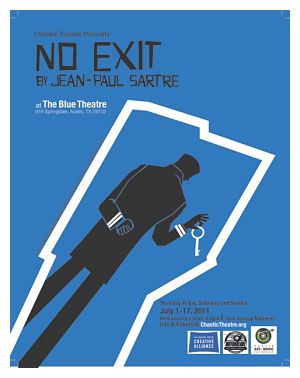
Review: No Exit by Chaotic Theatre Company
by Brian Paul Scipione
Published on July 11, 2011
Director Andrew Black’s No Exit fulfills the promises of the original play while connecting it to a modern audience in a raw and beautiful form.
Death without End Inès slips behind Estelle and coos comfortingly in her ear, gives her promises of faith, sisterhood and protection, and then suddenly she pinches her and shoves her away. . . Estelle cozies up to Garcin and whispers of an endless devotion in the only place that, endless, really has any meaning, then she turns away, haughtily dismissing him. . . Garcin shrugs aside his social predators and affirms his own solitude and …
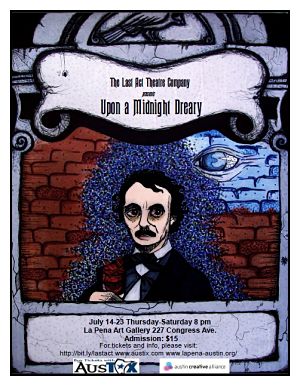
Review: Upon A Midnight Dreary by Last Act Theatre Company
by Michael Meigs
Published on July 11, 2011
In contrast to those somewhat overstaged pieces, The Tell Tale Heart was direct, convincing and suspenseful. Greg Klein's adaptation takes the principal concept -- the alarming and disorienting effect of heightened aural and visual sensitivity -- and develops it in a completely different context.
Edgar Allan Poe is a deceptively attractive figure for theatre makers. We've all read with a delicious shiver his best-known short stories. His themes of death, madness and mystery are so very elemental that they have never gone out of style. The elaborate early 19th-century style of his poetry may be a challenge, but the simple sardonics of his short stories, often in first person, appeal to our desire for intensity. As long as you're …
Review: Troilus and Cressida by Austin Shakespeare Youth Troupe
by Michael Meigs
Published on July 05, 2011
Shakespeare's sour vision of courtship and courtly honor is so off-putting, however, that a single unsuspecting hearing of the text could leave one confused and deceived.
Although the performance took place in the idyllic lakeside setting for The Curtain Theatre, Troilus and Cressida was no picnic. Austin Shakespeare put this summer's 16-member Young Shakespeare teen troupe into one of Shakespeare's grimmest and most cynical works. The epic characters of Homer's Iliad manifest gallantry and heroic courtesy, and the Trojan lovebirds Troilus and Cressida, grafted from medieval courtly romances via Chaucer, plunge into oaths and carnal pleasure. But the guiding spirits here …