Recent Reviews
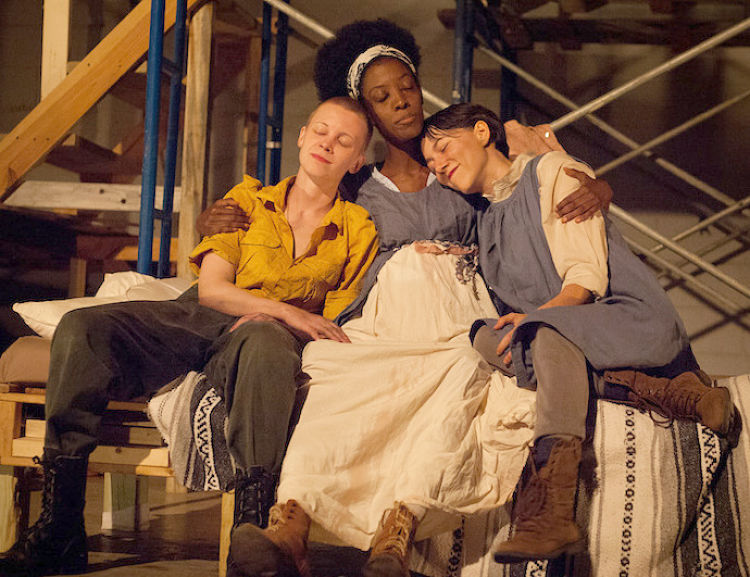
Review: Hold Me Well by Shrewd Productions
by Brian Paul Scipione
Published on July 28, 2016
The characters are on a raft adrift upon an empty sea with no hope in sight. We the spectators are the ghosts in the room.
The Immediate Jewel of the Soul “Good name in man and woman, dear my lord, is the immediate jewel of their souls. Who steals my purse steals trash. (…..) But he that filches from me my good name robs me of that which not enriches him, and makes me poor indeed.” These words from Act 3, scene 3 in Othello summarize both Iago’s fiendish plan and one of the play’s largest themes. It is the …
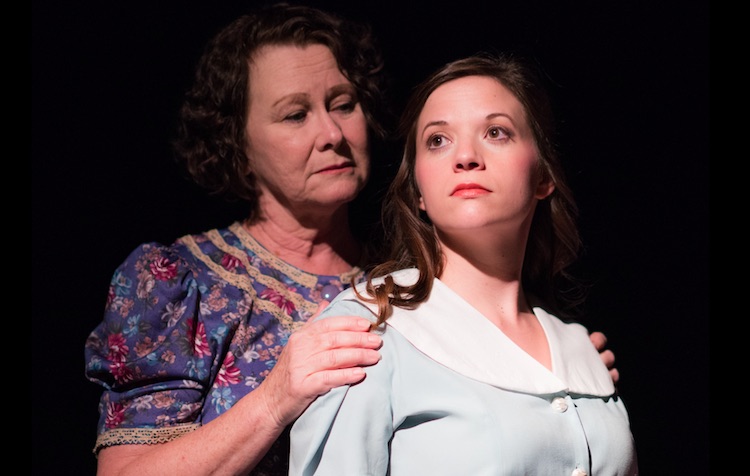
Review: The Glass Menagerie by City Theatre Company
by David Glen Robinson
Published on July 24, 2016
Ben McLemore's delivery of Tom’s final soliloquy, full of street wanderings and everlasting love for his sister, evokes the later concerns and sensibilities of the Beat poets.
The Glass Menagerie is a study in pressure cookers, a modernist work, and a snow globe of the 20th century age of alienation. Much has been written about the play and its author Tennessee Williams, including how the play very likely models significant features of Williams’ family as he was growing up. Many call it a memory play. None of that matters. The Glass Menagerie generalizes brilliantly the squirming discontents of North American family life …

Review: Lunt and Fontanne: The Celestials of Broadway by Classic Theatre of San Antonio
by Kurt Gardner
Published on July 22, 2016
Lang and Murphy are marvelous as the titular couple, as well as the other characters they morph into as the need arises by means of simple onstage costume changes. Lang delivers a particularly amusing Brando.
Prior to making its New York premiere at the New York Fringe Festival this coming August, Lunt and Fontanne: The Celestials of Broadway is making a welcome — if brief — stop at the Classic Theatre in San Antonio. Real-life acting couple Mark E. Lang and Alison Murphy play Alfred Lunt and Lynn Fontanne, another real-life acting couple who took Broadway by storm in the early years of the last century, even getting a theater …
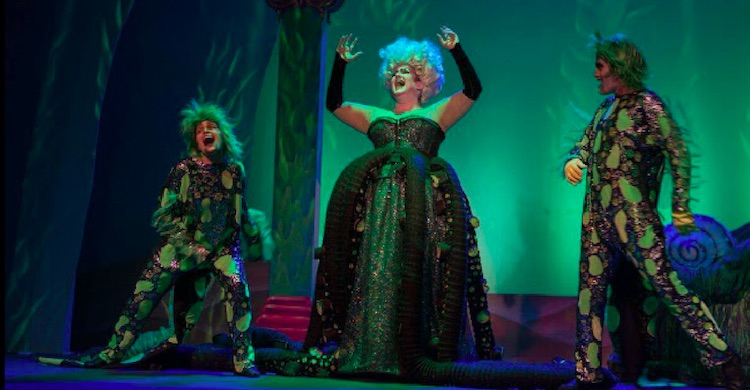
Review: The Little Mermaid, Disney by Woodlawn Theatre
by Kurt Gardner
Published on July 01, 2016
Performances are mostly broad and intentionally cartoonish to appeal to the youngsters, but adults may find them wearying in the long haul.
Back in the ’90s, the Disney corporation began mounting phenomenally successful Broadway adaptations of their animated hits Beauty and the Beast and The Lion King. So it was not at all surprising that they’d turn to their 1989 The Little Mermaid for the stage treatment. Running for 685 performances beginning in 2008, it was not quite as successful as its predecessors. A few changes to songs and characters were made to the show in 2012, …
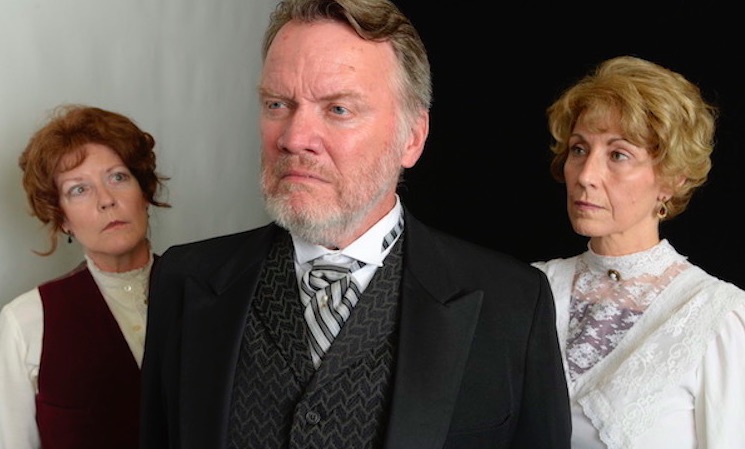
Review: John Gabriel Borkman by Different Stages
by David Glen Robinson
Published on June 26, 2016
In an end-of-career play better read than produced, King Henrik gives us a series of brilliant dialogues that are delivered lyrically by Ev Lunning, Jr.
John Gabriel Borkman is a legacy play about legacy. Ibsen wrote it in 1896, and it was his penultimate play, penned long after his reputation was established with such plays as A Doll’s House and An Enemy of the People. His entire artistic work, or oeuvre, may be thought of as prefiguring 20th century modernism with its emphasis in theatre on realism. Plays explored psychological and social issues with characters speaking directly of them in …

Review: Buyer & Cellar by Zach Theatre - A Look into the Mind of the Fanatical Realism of a Struggling Actor
by Brian Paul Scipione
Published on June 24, 2016
This is your chance to see an actor who has honed his craft and delivers it with an over-the-top vivacity that is purely endearing.
J. Robert Moore kicks down the fourth wall in the very first moments of Buyer and Cellar, Jonathan Tolins’ one-actor play that is making its local debut in Zach Theatre Company’s Kleberg Theatre. It’s not real, he says with a smirk. It’s not real ,he says with a giggle. It’s not real, he says with enthusiastic verve that is coyly coupled with what may be a sigh. What’s not real? The story of the play. …