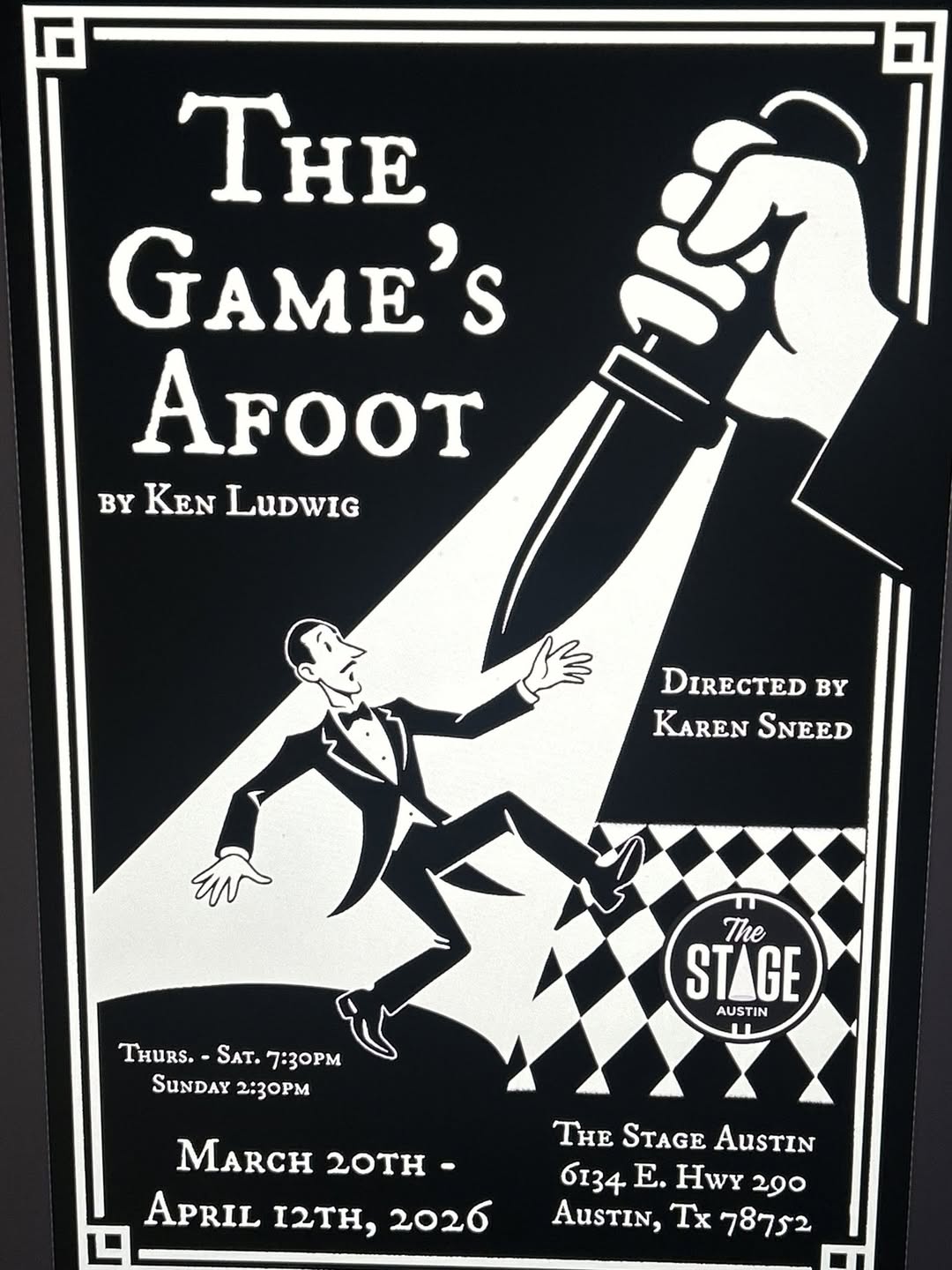
Review: The Game's Afoot by The Stage, Austin
by Michael Meigs
Playwright Ken Ludwig is prolific, clever, and widely admired, both in the bigger drama houses across the nation and in community theatres. The man currently has thirty-four scripts to his credit, an impressive number; even more impressive is his near-ubiquity in the U.S. theatre landscape. Perhaps you know that he crafted the popular adaptation of Murder on the Orient Express, a version of which recently played at Austin's Zach Theatre; you probably aren't aware that at the time, that play and four different Ludwig comedies were running in theatres of all sizes across Central Texas.
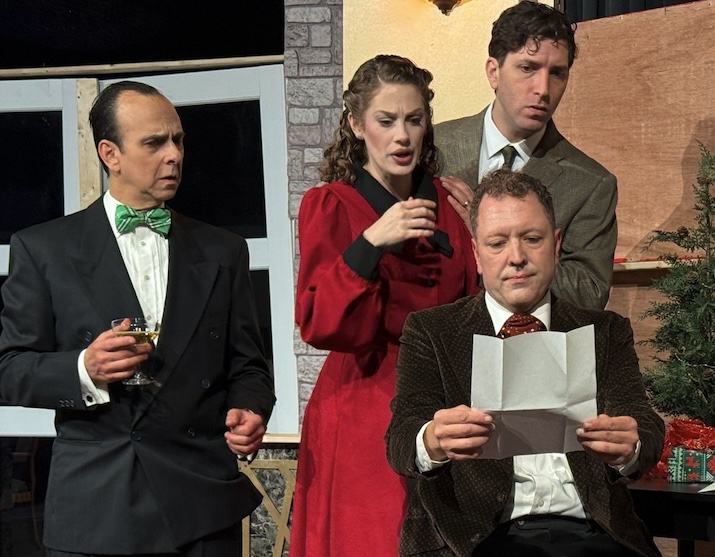
So it's no surprise that as the hardy band of determined Austin actors who established The Stage in 2018 undertake their first multi-play season, they've picked a Ludwig as their second 2026 production. Or that it's Ludwig's pastiche The Game's Afoot, an echo of Sherlock Holmes involving a murder à la Agatha Christie in an isolated mansion owned by famous actor William Gillette. Gillette personified Holmes for the U.S. public, at least until the movies delivered Basil Rathbone (14 films), Jeremy Brett (40 episodes on ITV), and many, many others.
The story's set in 1936 and has all the trappiings of the era, particularly the characteristic Hollywood focus on wealth and glamor to distract folks during the Great Depression. The audience gets a generous dose of atmosphere, a puzzle to guess, and an array of suspects including a fictional cast reuniting after closing a Holmes play in New York. The story develops on a dark and stormy night at Christmastime. Though Ludwig's subtitle Holmes for the Holidays often makes it a choice for that time of year, the holiday elements are essentially decorations not required by the plot.
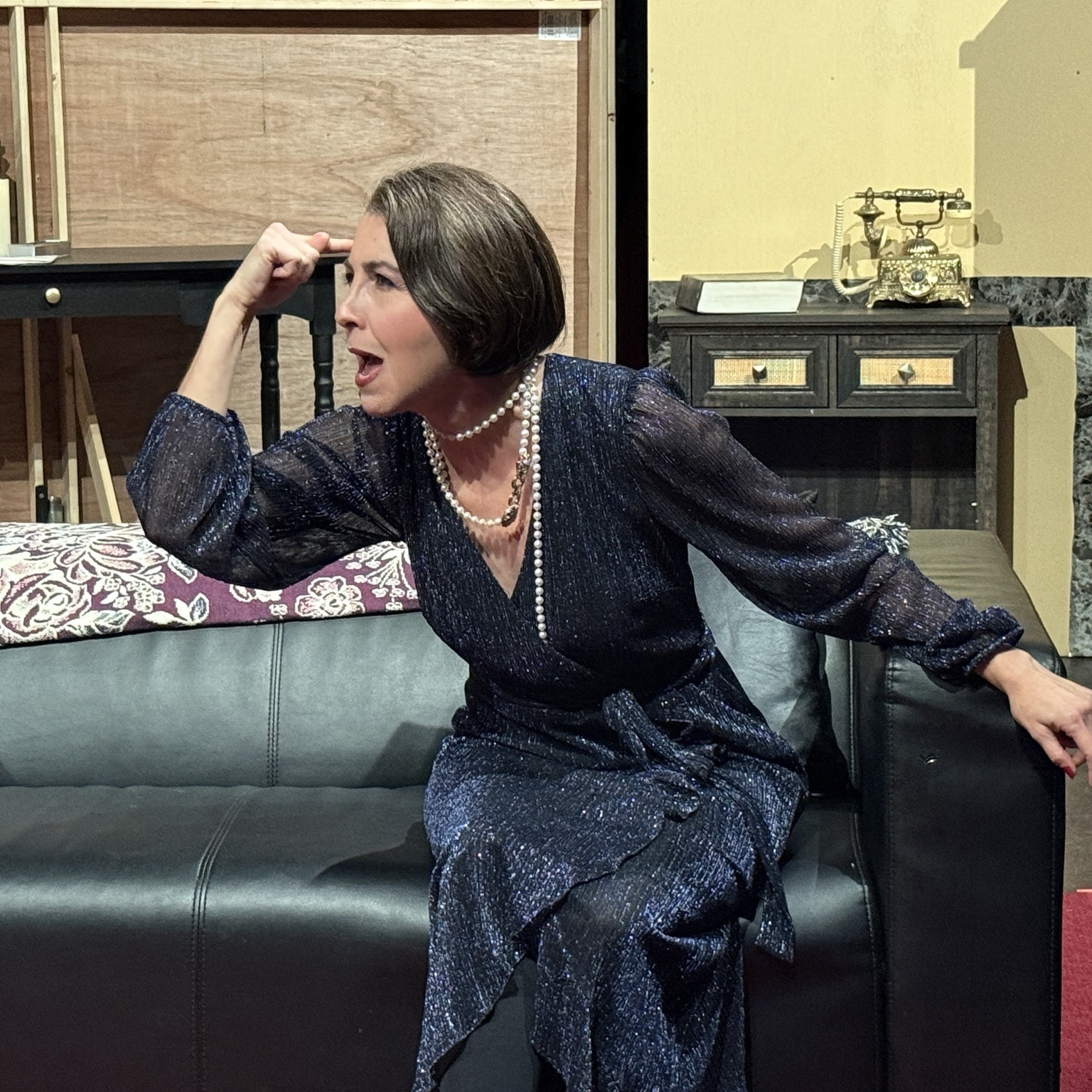
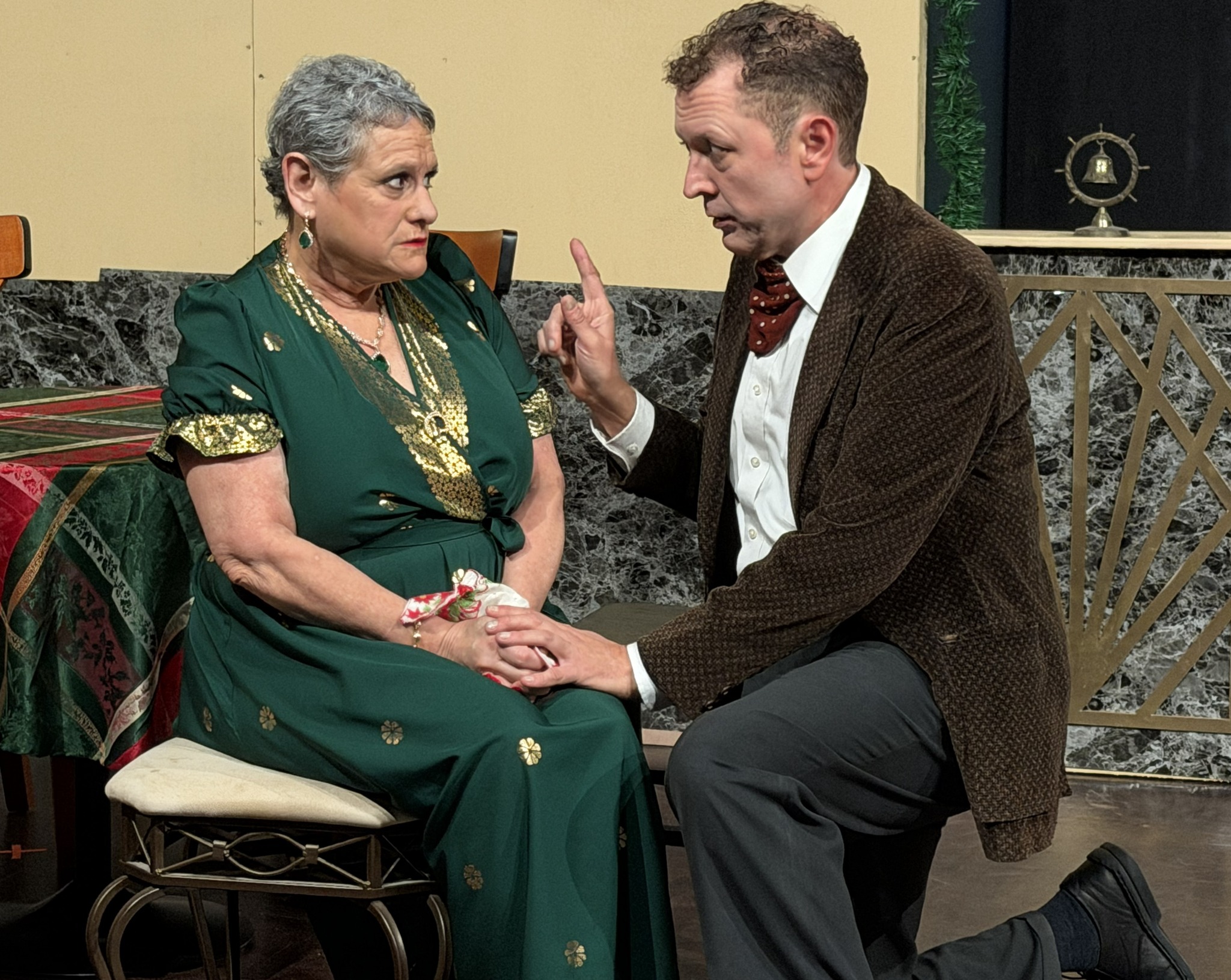 Darren Scharf, protagonist as Gillette (and frequently Gillette as Holmes) is contained and courteous, at least in Gillette's at-home persona. In Michael Stuart's set, the actor's ego is hinted at more broadly by a large full-face portrait hanging at stage left and dominating an area of the mansion living room that can be revolved to reveal a hidden room. Gillette's new-built mansion is tricked out with intercoms at the gate and throughout the house. Ludwig sets his plot spinning (often literally) with those toys and with jokes involving the old-fashioned inadequacies of both the antique telephone and the probably antique operator on the far end of it. Gillete's bachelordom is somewhat relieved by the presence of Martha, his mother, played by Andrea Littlefield with fussy animation reminiscent of the epoch's great character actress Marie Dressler.
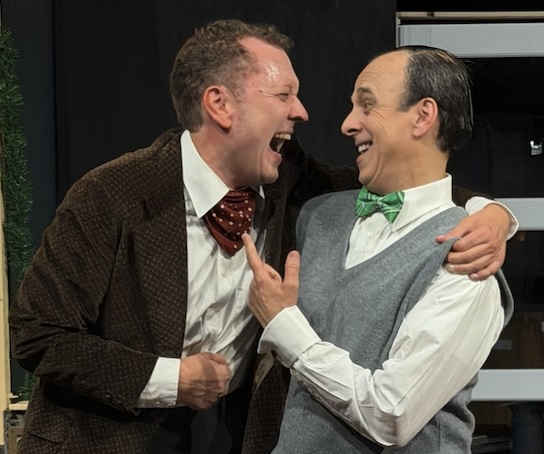 Every Holmes must have his Watson, and Austin's fine character actor Scot Friedman is Felix Geisel in that function. This Watson avatar is married to Madge (nicely comic Maddie Scanlan, fresh off a far more menacing take as Russian survivor Galina in Filigree Theatre's The Last Match).
The invitees who complete the cast-within-a-cast are Ty McLeod as Simon Bright, the younger male actor and Shanaya Dixon as Aggie Wheeler. These two proudly announce that they recently married in secret, a reason for adding more celebration to the doings. Dixon is the ingénue for the second time this season; she provided the same slinky, wide-eyed innocence as in Different Stages' The Murder of Roger Ackroyd (adapted not by Ludwig but by Mark Shanahan, using a more somber version of the 1930's tropes).
Unbeknownst to his guests, Gillette has also invited theatre critic/femme fatale/gossipmonger Daria Chase (Suzanne Balling), perhaps in hopes of persuading her to lighten up on her scathing reviews. Balling, a pro, is entirely at ease mocking and tormenting. She's as sweetly malicious as they come. When the time comes, she shows herself an expert in comic timing and pratfalls.
The murder's done in the dark by an invisible hand at the close of the first act. Tableau: Gillette at center stage kneeling by the corpse, alarmed and astounded. Act Two opens with the same moment. The playwright (and the director and the cast) then romp through surprises, reversals, and revelations, including the frequent use of that revolving set piece at stage left.
When the remarkable solo representative of public order does arrive, Meredith O'Brien as Inspector Goring hams it up. Judging from the accent she uses, she stands with a foot on either side of the Atlantic. Playwright Ludwig makes the character an "inspector" (in Connecticut? Certainly a tip of the hat to Dame Agatha!) and draws the investigator as your typically inept village constable. Director Karen Sneed and O'Brien embrace the idea, endowing the self-satisfied official detective with a uneducated country British accent. Those choices are funny but odd; they mirror somewhat Gillette's assumption that he really does have the acumen of Sherlock Holmes. In both cases, there's comic incompetence at work.
Ludwig caricatures the acting profession, often prompting his characters to launch into pompous quotations of famous Shakespeare lines (or completing speeches begun by someone else). As played, these do little to move the plot or define the characters. Perhaps some self-mockery (or mutual mockery) could lighten those moments.
There's a slippery margin between farce and force. When the murder most foul occurs, the company gets it right, teasing the audience into delighted laughter. The revelations at the end are less pleasing, for the nabbed culprit struggles with angry intent. Some physical comedy at that point could have llightened the moment, in keeping with the general movement of the story.
Despite the gleeful handfuls of red herrings, in The Game's Afoot you may guess who's responsible for the murder. But it's more likely you'll simply be enjoying the antics and the farce.
EXTRA
To view The Stage's program for The Game's Afoot, click HERE to see it at their website or HERE to view a .pdf version.
The Game's Afoot
by Ken Ludwig
The Stage
March 20 - April 12, 2026
 The Sterling Stage Austin
 Tickets on sale now: https://bit.ly/45M5wy5