Recent Reviews
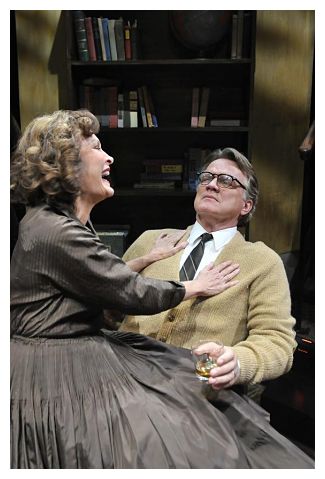
Review: Who's Afraid of Virginia Woolf? by Mary Moody Northen Theatre
by Michael Meigs
Published on November 16, 2010
Christi Moore and her cast have created three hard drinkers condemned to retain fluency of invective and imagination without losing visions of disaster.
I knew that this was going to be intense. I had invited friends to see it with me, and we had seats in the middle of the front row, south side of the "theatre in the square" at the Mary Moody Northen Theatre. After Michelle Polgar had dedicated the opening night's performance to the memory of Oscar Brockett, that grand old man of Austin theatre, the lights began to fade and I had a feeling …
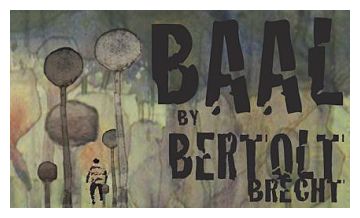
Review: Baal by Paper Chairs
by Michael Meigs
Published on November 15, 2010
Brecht gives characters elevated language that at times passes for verse -- Baal is always yammering on about the sky -- but that's not enough in itself to retain our attention.
Baal was Brecht's first play, written in 1918 at the age of twenty. He had avoided the draft by taking a medical course and he was called up to staff a venereal disease clinic only a month before the war ended, and much of that time he was studying theatre. Brecht did not articulate his doctrine of theatrical alienation until 1935, but this text and the production of it by Dustin Wills and the Paper …
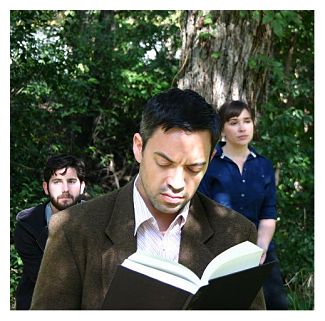
Review: At Home at the Zoo by Palindrome Theatre (2010-2013)
by Michael Meigs
Published on November 12, 2010
Jude Hickey is the editor and Nigel O'Hearn is the intruder. You couldn't cast this piece any better, at least, not here in Austin.
Edward Albee once commented, "If you can sum a play in one sentence, that's how long the play should be." That's a fine bon mot and a cutting challenge to all who try to work in the odd art form of the theatre review. Albee has challenged and puzzled the public, the theatre community and academics since The Zoo Story, the second half of this theatre evening, first took the stage in Berlin 51 years …
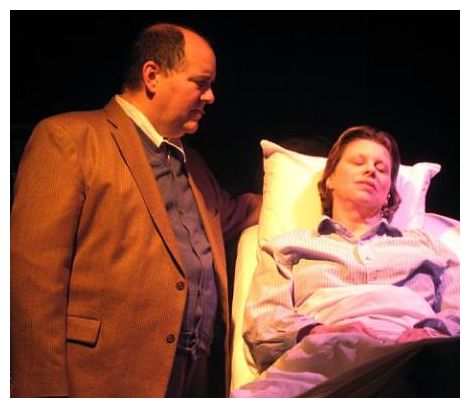
Review: Shadowlands by Trinity Street Players
by Michael Meigs
Published on November 10, 2010
José Shenkner is a wonder in this role, particularly for his physical control of the character while delivering a complex, layered emotional portrayal. Linda Miller Rath creates Gresham with sharp tongue and acute sensibilities. The two play superbly against and with one another.
I am a bookish sort of person -- not fiercely literary, but more inclined to take my reference points from a printed page than from a screen. I was aware of C.S. Lewis because my daughter and son had absorbed the Narnia books and because back in my own school days I had wrestled a bit with The Screwtape Letters, but I had not much more knowledge of him than that. When this piece came …
Review: The Crucible by Renaissance Austin
by Michael Meigs
Published on November 04, 2010
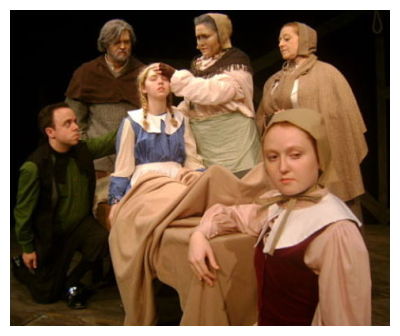
Miller's title has resonance for our own times. A "crucible" is a receptacle used for mixing materials at extremely high temperatures, as in a smelting furnace. In simplest terms, a "melting pot," for a nation in which that metaphor is more and more in question.
Arthur Miller's play The Crucible deals with dark and frightening times. Though the setting is 1692 Salem, Massachusetts during the wide-ranging hunt for witches, this 1953 piece is equally an evocation of America's sudden dark fear of enemies in its midst. Just years earlier, in World War II the Soviet Union had been considered a valiant ally; with the division of Europe, the threat of the atom bomb and the populist hectoring of politicians such …
Review: A Most Unsettling and Possibly Haunted Evening in the Parlour of the Brothers Grimm by Hidden Room Theatre
by Michael Meigs
Published on November 03, 2010
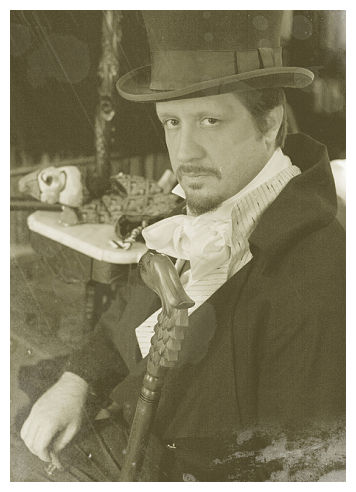
That impossibly long title might suggest more whimsy than one could stomach, but in fact the Evening in the Parlour of the Brothers Grimm was something of a Halloween valentine. Or more precisely, perhaps, a delicate, exciting dark chocolate delight, laced with spices and bitter almonds.
We had a lovely evening at the Hidden Room last weekend in the company of some of Austin's more whimsical and talented theatre artists. That impossibly long title might suggest more whimsy than one could stomach, but in fact the Evening in the Parlour of the Brothers Grimm was something of a Halloween valentine. Or more precisely, perhaps, a delicate, exciting dark chocolate delight, laced with spices and bitter almonds. Sweet enough to make you …