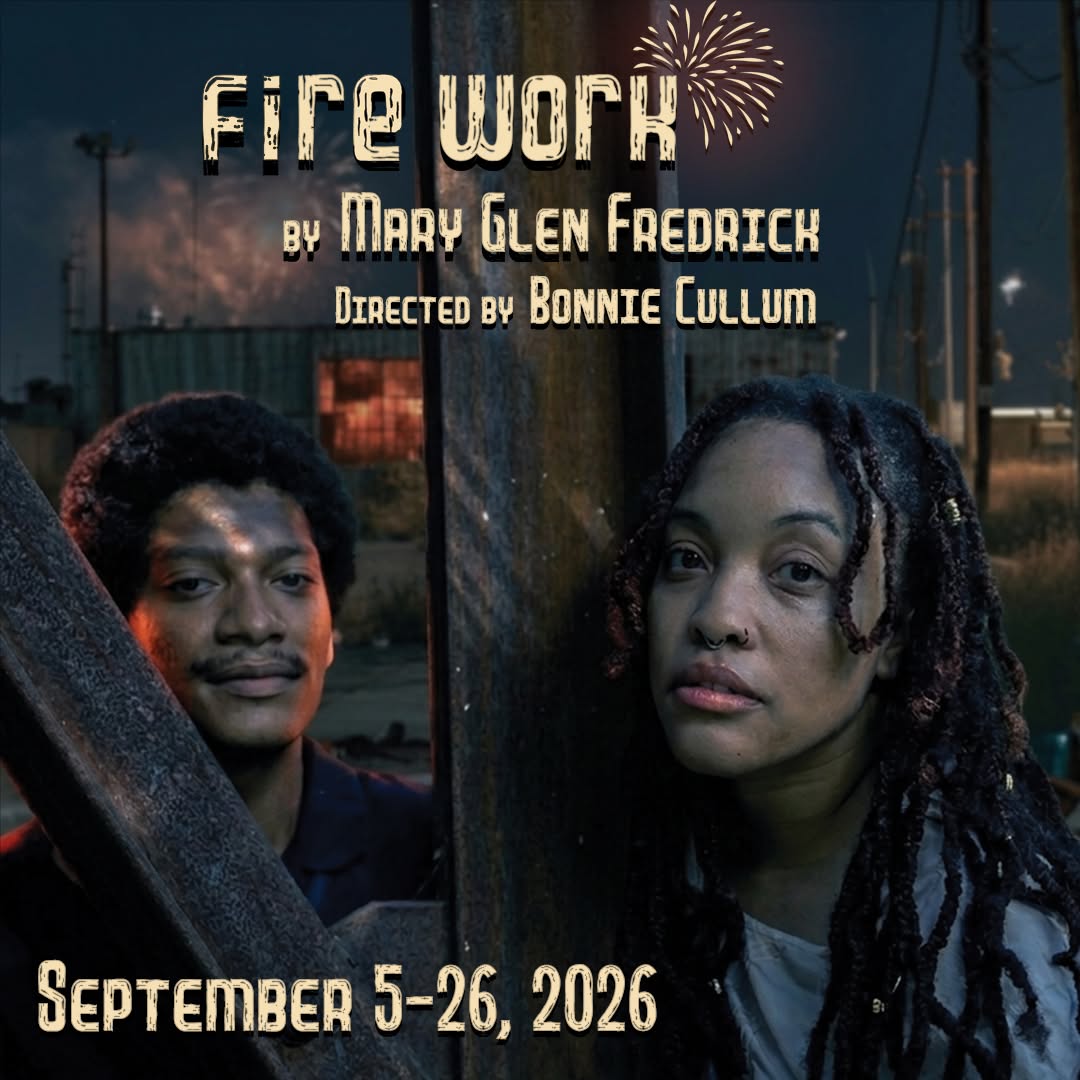
Review: fire work by The Vortex
by David Glen Robinson
“I didn’t want a big life—I wanted our life."
Spoken at the climax of Fire Work, those words brought the vast scales of the play’s themes down to the level of the human heart. The line and the scene from which it exploded illuminated the great crime of grinding poverty. The kind that imprisons the body, heart, mind, and soul, and, against all heroic efforts, sadistically thwarts any attempt to escape. Fire Work gives us the poverty, heroism, and the cruelty. We search for a grain of hope near the end and don’t find one, but we do go home after a full theatre experience, a lesson about today’s capitalist world and the discovery of a bright, bright gem shining a dark, dark light.
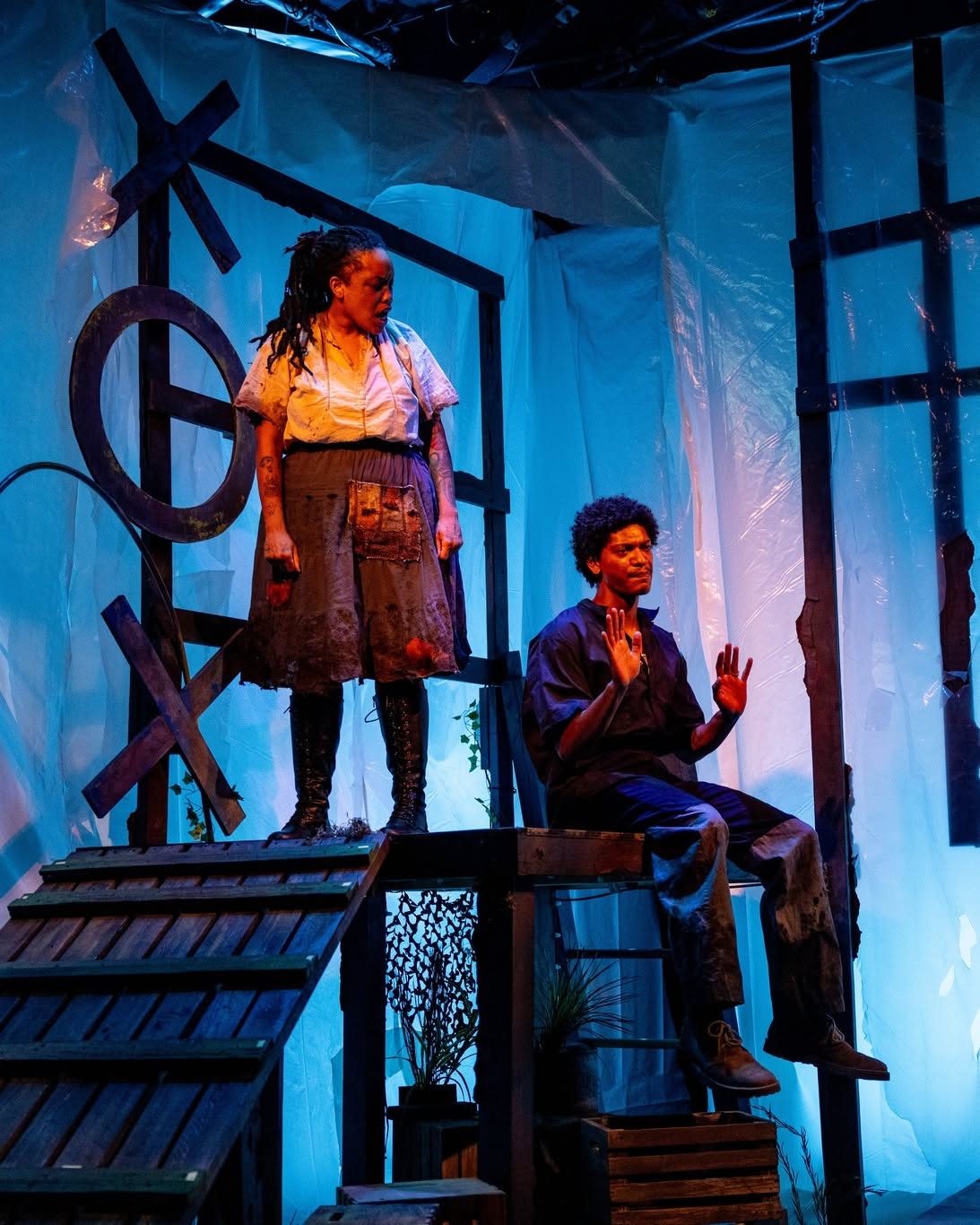
Bonnie Cullum directs the play, with production design by Jason Amato.
The play is a fantasy tale about hard-bitten realities, an allegory of modern times. At the beginning, a man and a woman in nondescript clothing enter a set representing a burned-out, abstracted back alley. One of the few things that becomes clear in the opening is that they consider themselves married but unhappily. Bartholomew (René Otero) says he's gotten a promotion and a raise, but Eleanor (Allegra Jade Fox) says that's useless for elevating them from their lowly estate. They quarrel heatedly but reach no resolution. Here we see a story flaw, one. The audience viewing adult actors doesn't know the characters are prepubescent children. No clues in the costuming, no notes or cues to clue us in. The action runs for several minutes before our ears and minds piece that together. Dialogue eventually establishes that Bartholomew’s raise was to 17 cents a week; no parents are ever mentioned or portrayed in the show. Following this, Eleanor and Bartholomew are visited, or perhaps invaded, by a gang of street kids (Julie Moore, Aurora Villarreal, Alaithia Velez, and Blaise Ricin--adult actors all). Youngsters who can still find joy in play while struggling against the limitations of their ghetto confinement.
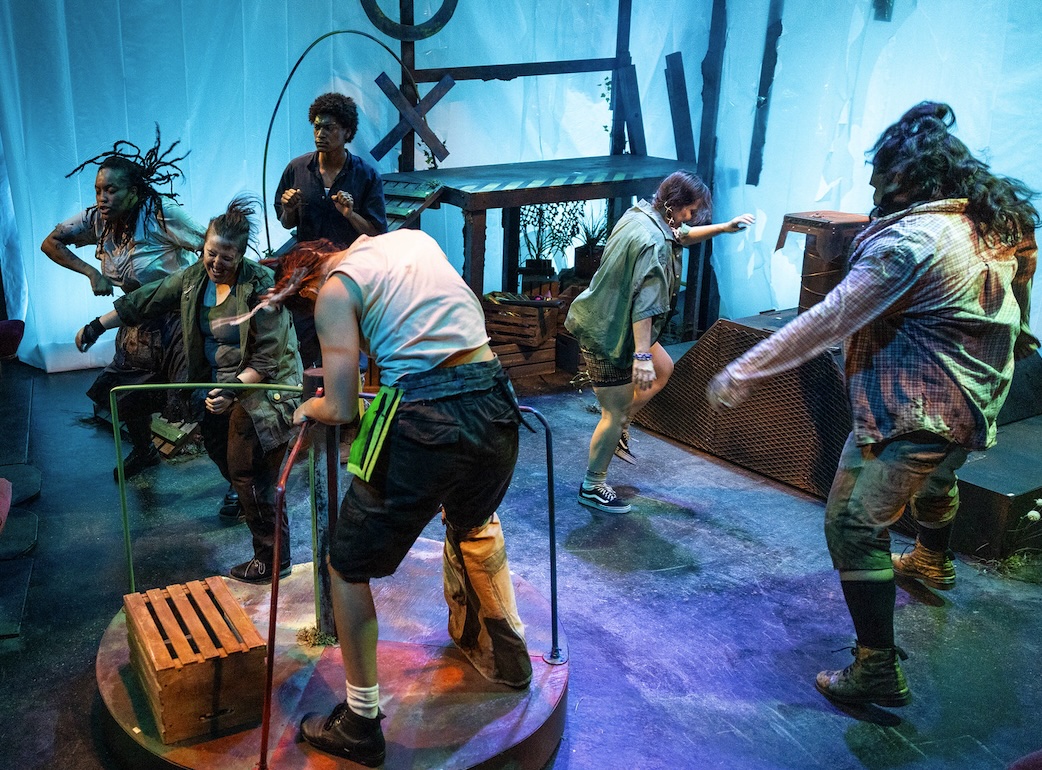 By this point we recognize the play as structured fantasy, an allegory. We accept that Eleanor and Bartholomew have a side hustle staging firework displays. The mournful drama builds, and this reviewer and the audience mentally constructed their own series of concept-image panels to comprehend the story. The narrative starts someting like The Lord of the Flies and progresses into Brave New World. The gang plots a revolution, we imagine Animal Farm. As it all takes shape, we see the Guy Fawkes episode in English history, then suddenly we're part of Alice's Adventures in Wonderland. The tragic ending slams us back into Brave New World. Note: the story about the thirteenth-century Children’s Crusade told by a semi-literate character does not wash, even as fantasy.
When the plans are laid, playwright Mary Glen Fredrick changes everything. With more than a mere plot twist, she hurls us beyond the astounding by breaking the chain of the narrative. How will she reintegrate these pieces and the links reforge? A diminutive figure enters, stage center. Anais Summers Robbins is attired in a black suit, possibly a tuxedo, topped by an Edwardian top hat, but without a cane. The audience starts to respond. even before she starts to speak. When she does, she projects a monster voice, huge, echoing, amped, slightly out of sync, and booming like sound effects from the animé movie Akira. She's calm. The audience roars. The cast watches, silent.
This new figure exhorts, evaluates, encourages, and judges with Victorian hand and body gestures, measured and correct. She makes great prim bows and postures while speaking. She's a kiss of magical realism. Her movements and great contrast with the other characters suggested fleetingly she might represent an android or robot. Only briefly did that thought waft through the smoky atmosphere. The emotional color, richness, and perfection of her performance made of her nothing but a delight. At her scene’s end she offered a plot-pivoting gift to the other characters.
This character is listed as “Factory Boss.” Young actors Anais Summers Robbins and Maybelline Nardio share the role, alternating between performances. Robbins looks between 8 and 10 years of age. The metatheatrical twist here, a brilliant one at that, is that in a play of adult actors playing children the only adult is played by children . The scene is the last set of images establishing the otherness of the entire play. It works exceedingly well, allowsing the audience to forget concerns both about the absurdism and the logic. Deciphering plot details worked into turgid dialogues isn't necessary for a keen appreciation of Fire Work.
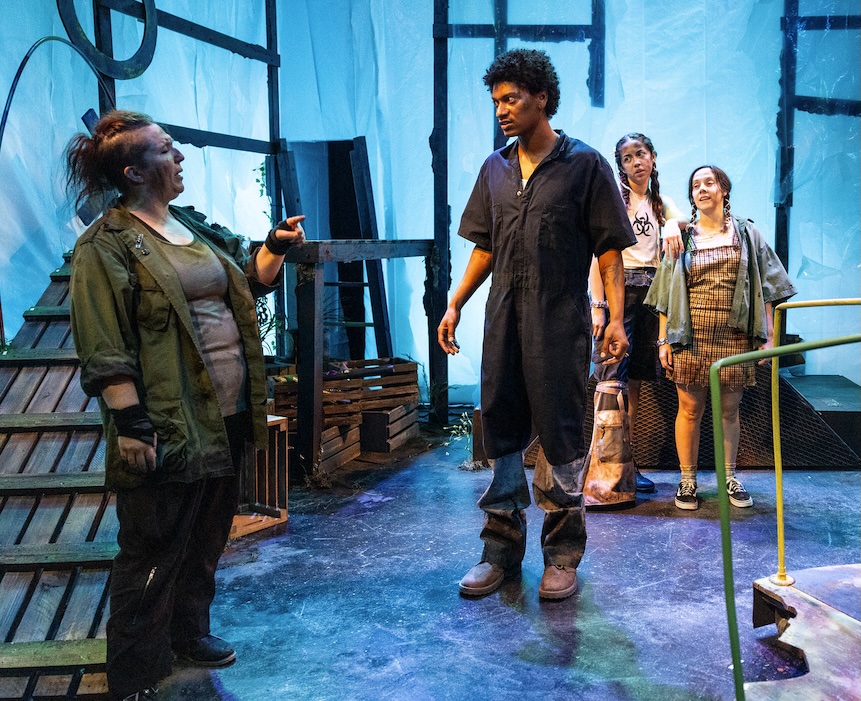
Jason Amato, back in Austin, responsible for lighting and set design. The highly talented Patrick Anthony backs him up as master electrician and principal assistant for lighting design. Johann Solo composed original music and designed sound featuring Chad Salvata's XyberMancer Party Music. Cece Sanchez did costumes; Ivy Vidal designed hair and makeup. The audience greatly appreciated this complex producion's projections, which combined and blended lights, videos and photos, especially in the fireworks scenes. Tandre Rodriguez accomplished that hybrid design. The stage management team consisted of Jamie Carroll, Tamara L. Farley, and Madi Corbin. The assistant directors were Gabriel Maldonado and Jaimee Harmon-Taboni. The design and technical teams truly made Fire Work work.
Fire Work by Mary Glen Fredrick runs September 5 to 26, 2026. The play is a new offering of the National New Play Network, part of the Rolling World Premiere series that creates extraordinary opportunities for emerging playwrights. The Austin premiere is one of three, the others taking place in Kansas City and Washington D.C. The play and this Austin production are a great credit to the National New Play Network. Kudos to all concerned.
Fire Work runs is recommended for thoughtful adults not offended by the foul street language that seems de rigeur in modern U.S. theatre.
EXTRA
Promo video from The Vortex
fire work
by Mary Glen Frederick
The Vortex
September 05 - September 26, 2026
September 5-26, 2026
Thurs-Sat 8 pm Sun 6 pm
The Eloise Brooks Cullum Stage @The VORTEX
2307 Manor Rd. Austin, TX 78722
Tickets: $39/$29/$15 General Admission
LIMITED SEATING
$39 Benefactor
$29 Enthusiast
$15 Discount/Child/Artist/Student/Senior
$9.99 Live Stream
www.vortexrep.org or 512-478-5282
Advance Reservations Recommended. Limited seating.
Blue Star Theatre: Discounts for Military, Veterans, and their families.
Radical Rush Free Tickets: Limited free tickets for each performance in the spirit of sustainability, accessibility, and the gift economy. Radical Rush tickets released one hour in advance-in-person only.
“Industry night” Wednesday, September 23, 2026 8 pm
2-for-1 on Wednesday with donation of 2 cans of food for SAFE
ASL-interpreted Saturday, September 12- 8 pm
Live-Streamed - September 17 8 pm CT
Six Square-Austin’s Black Cultural District.
Bus route. Bike Racks. Limited Free Parking.
The Butterfly Bar@The VORTEX opens at 5 pm: hand-crafted cocktails, mocktails, wine, and beer.
Patrizi’s@The VORTEX opens at 5 pm: delicious homemade Italian food.