Reviews for Different Stages Performances
Review: The Magic Fire by Different Stages
by Michael Meigs
Published on January 19, 2019
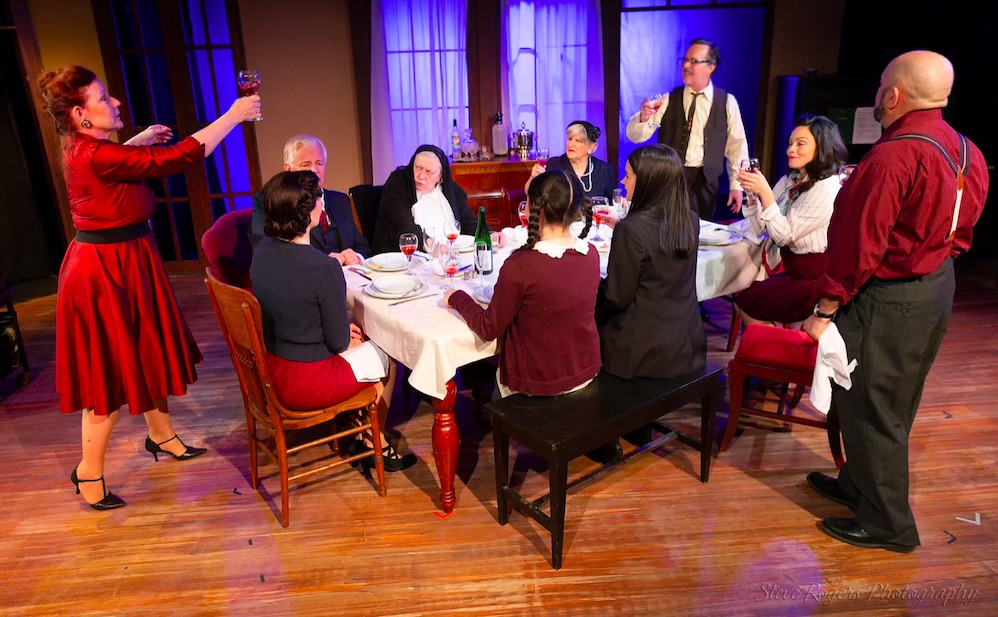
The script of THE MAGIC FIRE is a gem, rich of character and powerfully evocative, presented as a memory play by the narrator Lise, unashamedly an avatar of the playwright herself.
Norman Blumensaadt's Different Stages, active in Austin since 1981, isn't a repertory company in the strict sense. It's a creation of Norman's initiative and vast knowledge of mostly twentieth-century theatre literature of the U.S. and U.K., homeless and itinerant, beloved of a small but appreciative clan of actors and theatre goers. Different Stages offers its aficionados evenings of theatre they're unlikely to get elsewhere. Their current production, Lilian Groag's deeply moving The Magic Fire, has …
Review: When We Are Married by Different Stages
by Michael Meigs
Published on February 06, 2018
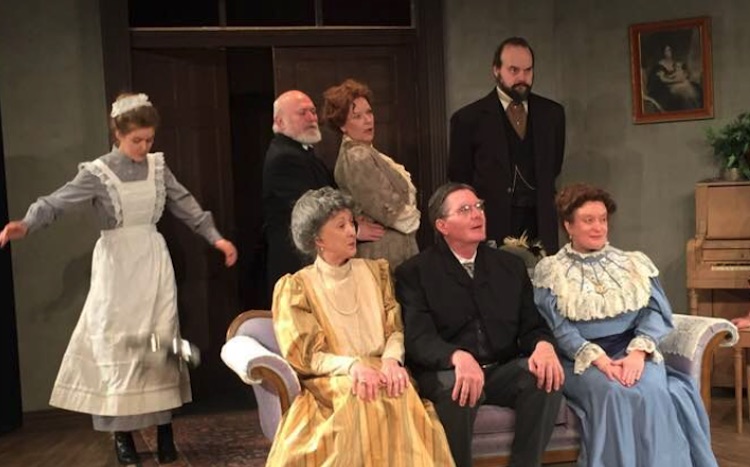
Because it's a well-made play, propriety is restored. And that's too bad, for the sharp truth-telling of comedy is covered over by a return to an only slightly altered status quo.
Different Stages' announcement of When We Are Married set up a bothersome tugging on my memory. Hadn't they done this piece before? An English comedy - on the theme of marriage - set in the very early 20th century - by J.B. Priestly? I've climbed aboard artistic director Norman Blumensaadt's literary-artistic time machine so often -- 32 times to date -- that I couldn't be sure. So of course I went checking. And in fact, …
Review: A Member of the Wedding by Different Stages
by Michael Meigs
Published on November 29, 2017
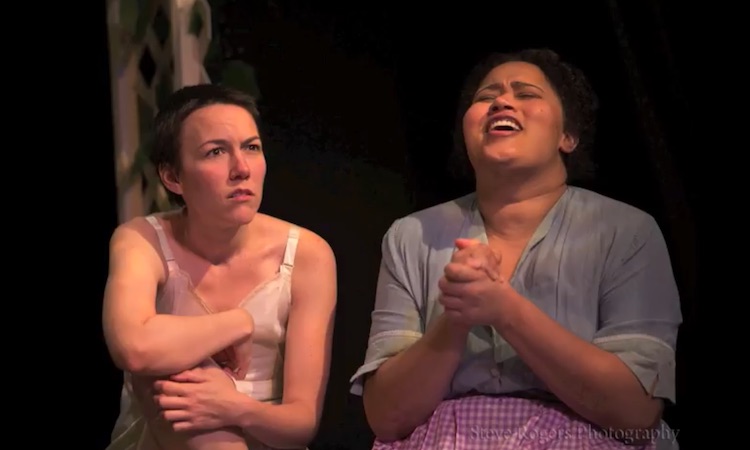
There’s a lot of motion in the Adams kitchen as Frankie speculates, pouts, plays and proclaims, but the movement of A MEMBER OF THE WEDDING is gradual, deliberate and short. It's a three-act, three-person play with a twelve-person cast.
This is a land with which we’re familiar: the small-town South of the first half of the twentieth century, where life was predictable, stratified and oh so boring for smart children. That was before television, mass culture, globalization and the Internet struck their intrusive noses under the tent. Truman Capote captured that world; so did Flannery O’Connor; likewise with Carson McCullers. William Faulkner did, too, though he dived far deeper and built a world beyond …
Review: Mrs. Mannerly by Different Stages
by Michael Meigs
Published on April 04, 2017
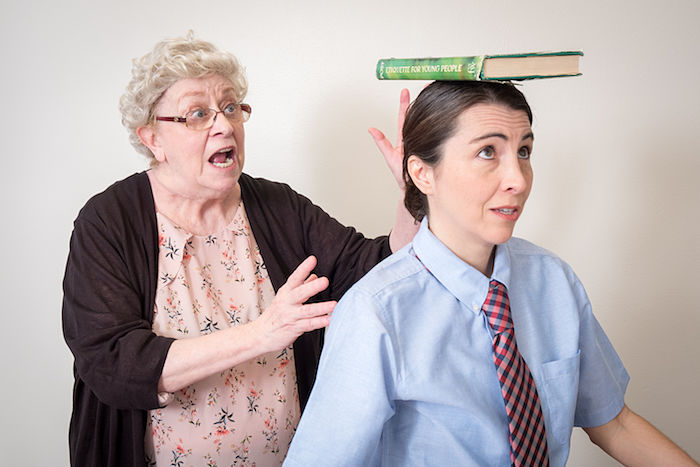
Jennifer Underwood and Suzanne Balling combine to produce theatre to transform the Santa Cruz Center not only into Steubenville, Ohio, in the 1960s but also into a magic lantern of memory.
Jennifer Underwood and Suzanne Balling have worked together on stage before, perhaps most memorably in the 2009 Different Stages production of Christopher Durang's Miss Witherspoon which brought Balling a B. Iden Payne award as supporting actor in a comedy. That production, like the current staging of Mrs. Mannerly by Jeffrey Hatcher, was directed by Karen Jambon. Both works are lightly ironic comedies; both show these two very familiar and much applauded Austin actresses to great …
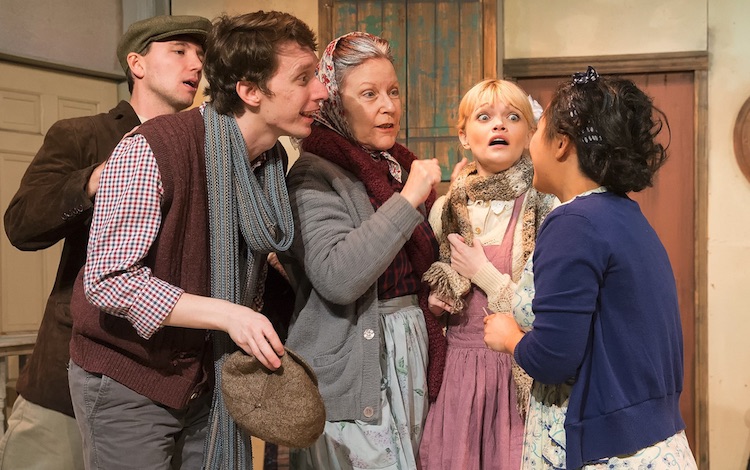
Review: The Noisy Neighbors, or The Square (Il Campiello) by Different Stages
by Michael Meigs
Published on January 11, 2017
Each of the dozen actors in Goldoni's exuberant comedy fits snugly into a stereotype and charms us with it. You never quite know which combination of characters is going to plunge onstage.
Indeed, they are noisy, and they can come at you from just about anywhere, since there are six entrances and three windows in Ann Marie Gordon's intentionally rickety set plus the black box theatre aisles left and right. The adaptation by Richard Nelson of Yale is faithful to the spirit of Goldoni's commedia dell'arte piece for Carnival in Venice in 1756, although you'll immediately recognize the tunes sung by the ensemble with lyrics completely different …
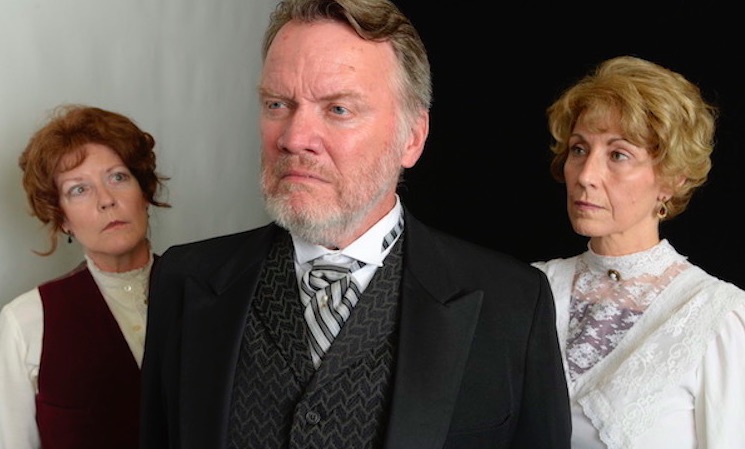
Review: John Gabriel Borkman by Different Stages
by David Glen Robinson
Published on June 26, 2016
In an end-of-career play better read than produced, King Henrik gives us a series of brilliant dialogues that are delivered lyrically by Ev Lunning, Jr.
John Gabriel Borkman is a legacy play about legacy. Ibsen wrote it in 1896, and it was his penultimate play, penned long after his reputation was established with such plays as A Doll’s House and An Enemy of the People. His entire artistic work, or oeuvre, may be thought of as prefiguring 20th century modernism with its emphasis in theatre on realism. Plays explored psychological and social issues with characters speaking directly of them in …